A concrete house slab is one part of a new build you really do not want to get wrong.
Once the concrete is poured, fixing something underneath it or changing its position becomes considerably more complicated than sorting it out beforehand.
Good house slab construction in Melbourne starts well before the concrete truck arrives. Ground conditions, engineering, excavation, reinforcement, plumbing, drainage, access, weather and curing can all influence the quality of the finished result.
Whether you are a homeowner building a new house, a builder managing several trades or a developer preparing a residential project, these are 10 things worth getting right.
1. The Ground Under the Slab Matters
Every good slab starts with what is underneath it.
Melbourne properties can vary considerably in soil type and site conditions. The slab design therefore needs to suit the specific property rather than relying on a one-size-fits-all approach.
Before construction begins, the appropriate engineering and site information should determine how the slab is prepared and constructed.
Problems can begin when ground preparation is rushed or assumptions are made about the site.
Good preparation may involve:
- Excavation to the required levels
- Removal of unsuitable material
- Appropriate filling and compaction
- Checking site levels
- Allowing for drainage requirements
- Preparing the area according to the approved plans
The concrete might be the part everybody notices, but what sits underneath it is just as important.
2. The Engineering Plans Need to Be Followed
Concrete house slabs are not something that should be built by eye.
Engineering plans establish important details such as slab dimensions, footing requirements, reinforcement and structural specifications for the project.
Experienced concrete contractors should be comfortable working from these documents and coordinating with the builder and relevant trades.
For homeowners, this is also why comparing slab quotes based solely on square metre rates can be misleading.
Two slabs of a similar size can involve very different levels of preparation, reinforcement, excavation and complexity.
The right question is not simply, “How much concrete are we pouring?”
It is, “What does this particular slab need?”
3. Site Preparation Can Make a Huge Difference
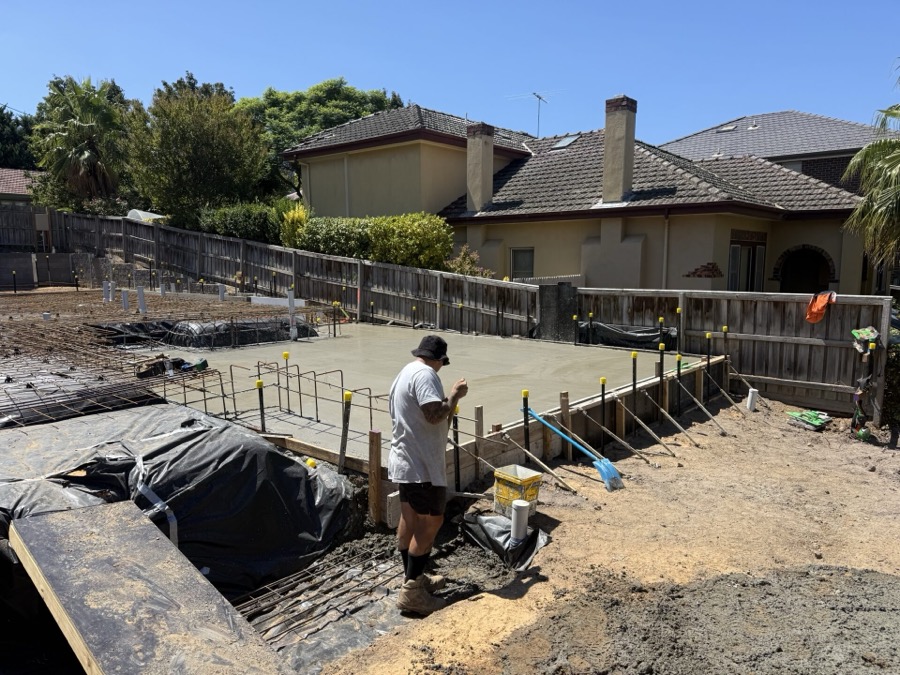
The slab area needs to be properly prepared before reinforcement is installed and concrete arrives.
This sounds obvious, but preparation is one of the areas where attention to detail matters.
Incorrect levels, poorly prepared areas or rushed groundwork can create problems that become much harder to address later in the job.
For house slab construction in Melbourne, preparation should be completed in line with the project plans and the conditions of the site.
That might include coordination between excavation, plumbing, concreting and building teams.
It is not the glamorous part of a concrete project, but it is one of the most important.
4. Plumbing Needs to Be in the Right Place Before the Pour
Finding out a plumbing penetration is in the wrong position before the slab is poured is inconvenient.
Finding out afterwards is a very different conversation.
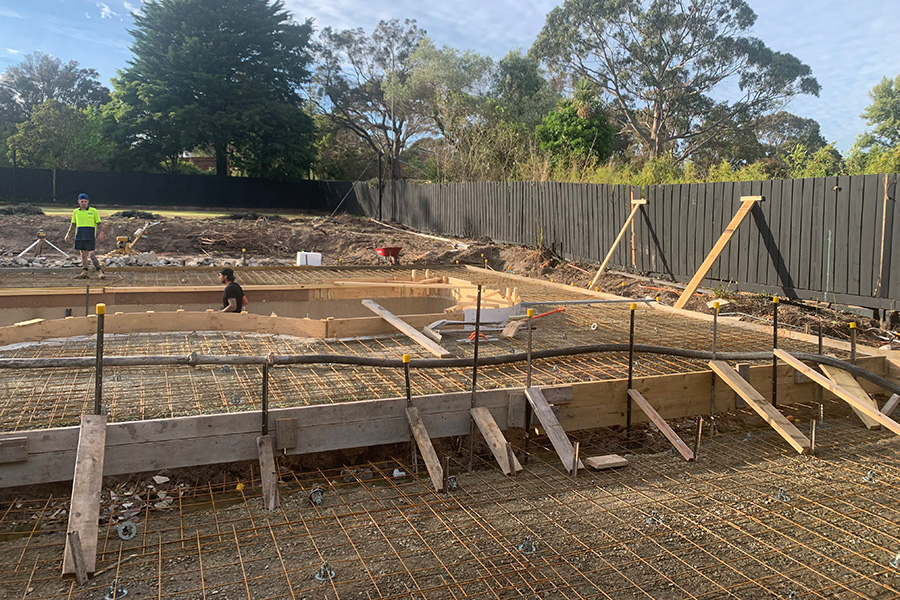
Plumbing and service locations need to be checked carefully before concrete placement.
This requires good communication between the concreter, plumber and builder.
Items that may need to be confirmed include:
- Waste locations
- Pipe penetrations
- Bathroom positions
- Kitchen services
- Drainage
- Other services passing through or beneath the slab
A few minutes spent checking measurements before the pour can prevent considerably more work afterwards.
5. Reinforcement Has to Be Installed Properly
Steel reinforcement plays an important role in concrete slab construction.
The reinforcement specified for the project needs to be positioned according to the engineering requirements rather than simply placed somewhere inside the slab.
This can involve reinforcement mesh, bars, chairs and other components depending on the design.
Correct installation helps ensure the completed slab performs as intended.
This is another reason experienced residential concreting contractors in Melbourne are valuable. Understanding drawings is one thing. Correctly translating those plans onto a working construction site is another.
6. Concrete Access Needs to Be Planned
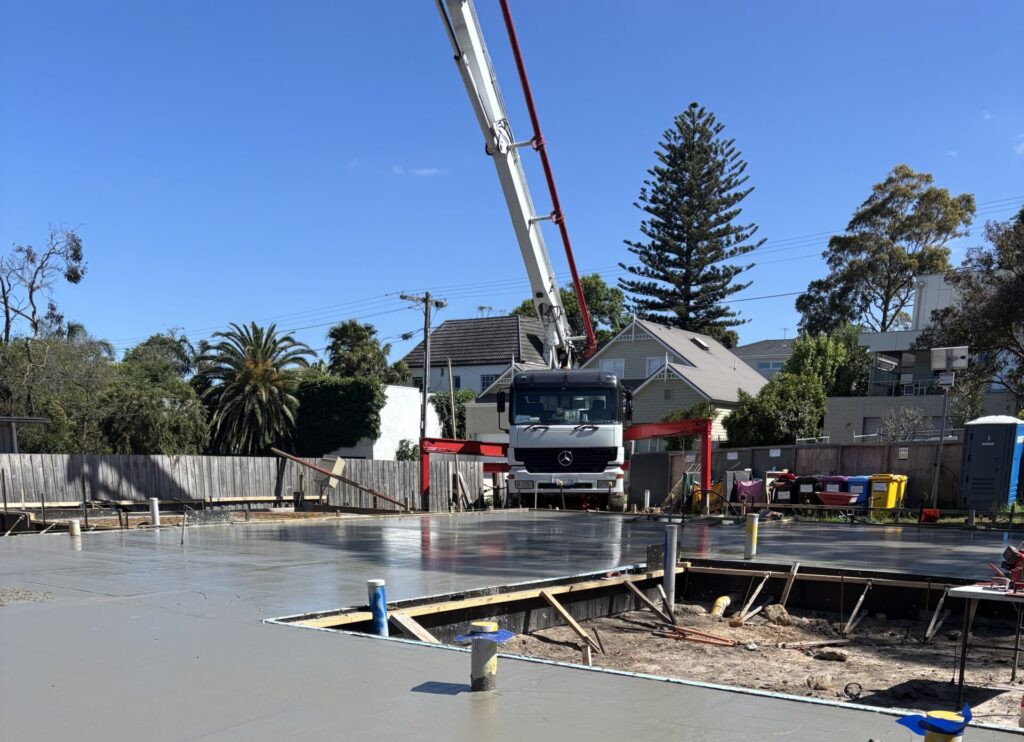
Concrete trucks are large.
Concrete pumps also need room.
And not every Melbourne building site comes with a beautifully clear driveway and unlimited access.
Access should be considered before the day of the pour.
The concreting team may need to consider:
- Truck access
- Concrete pump positioning
- Overhead restrictions
- Neighbouring properties
- Fences and gates
- Road access
- Site gradients
- Space for workers and equipment
On tighter residential sites, good planning can make the difference between an organised pour and a very long day.
The best time to discover an access problem is not when the concrete truck is arriving.
7. Melbourne Weather Can Change the Plan
Anyone who works outdoors in Melbourne knows the weather does not always read the schedule.
Rain, strong wind, high temperatures and sudden weather changes can all affect concrete works.
That does not mean every cloudy day causes a project to stop. It does mean conditions need to be monitored and professional judgement used when scheduling a pour.
For larger residential slabs, preparation involves coordinating labour, concrete supply, equipment and other trades.
Sometimes changing the timing of a pour is the smarter option.
Getting concrete down quickly is not more important than getting the job done properly.
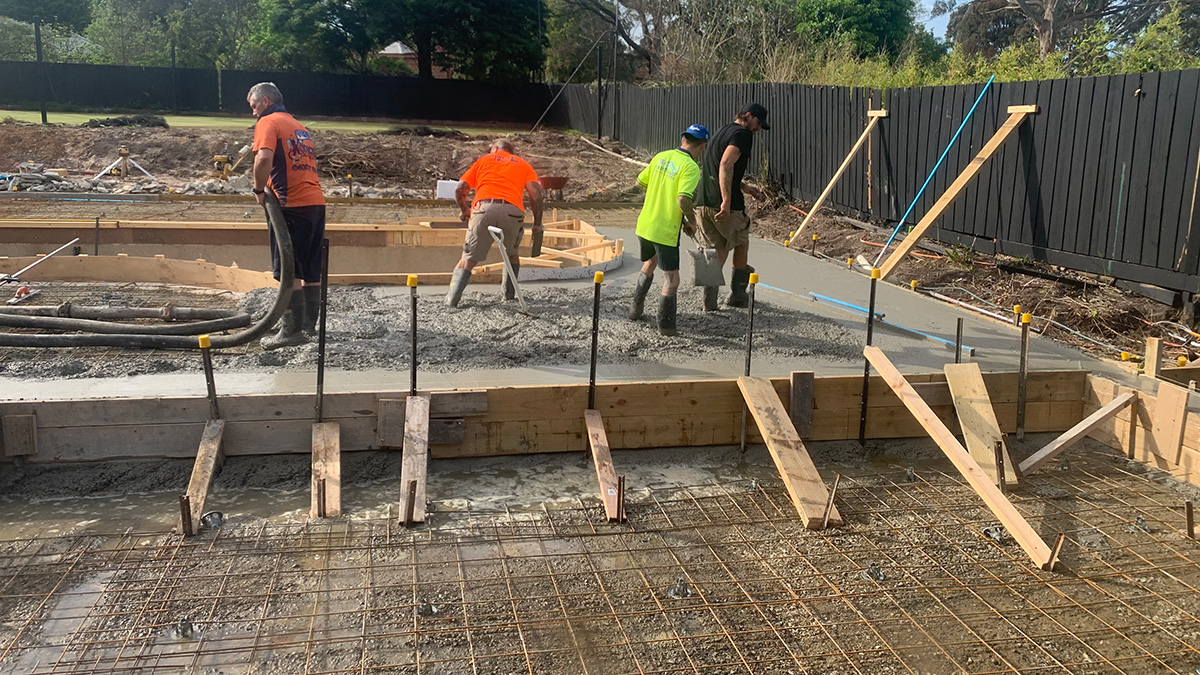
8. The Concrete Pour Needs an Experienced Team
Once concrete placement starts, there is limited room for indecision.
Everyone needs to know their role.
The team needs to manage placement, levels, finishing and other requirements while working within the timeframe of the pour.
Experience becomes particularly important on larger or more complicated house slabs.
A professional concreting crew should be able to work methodically while communicating with the builder and other people involved in the project.
This is where preparation earlier in the job pays off.
When the site, reinforcement, services, access and concrete delivery have already been properly organised, the pour can proceed much more efficiently.
9. Curing Matters After the Concrete Truck Leaves
The job is not finished simply because the concrete has been placed.
Concrete continues developing strength after the pour.
Appropriate curing and protection of the slab are important parts of the process and should be considered as part of the overall construction program.
Builders and homeowners should also understand that concrete does not instantly reach its final performance the moment it looks hard.
Construction schedules need to account for the requirements of the slab and the project.
Rushing the next stage simply because the surface appears solid is not a particularly good project strategy.
10. Communication Between Trades Can Make or Break the Job
A house slab rarely involves only the concreter.
There may be builders, excavators, plumbers, engineers, surveyors, concrete suppliers and other contractors involved before the slab is complete.
Good communication between those people matters.
The concreting contractor needs to know what is expected. The builder needs confidence that the project is progressing correctly. Other trades need to complete their work at the appropriate stage.
When communication breaks down, jobs slow down.
When everybody knows what needs to happen and when, the project becomes considerably easier to manage.
For builders in particular, working with a reliable concreting team can help reduce unnecessary site delays and repeated follow-up.
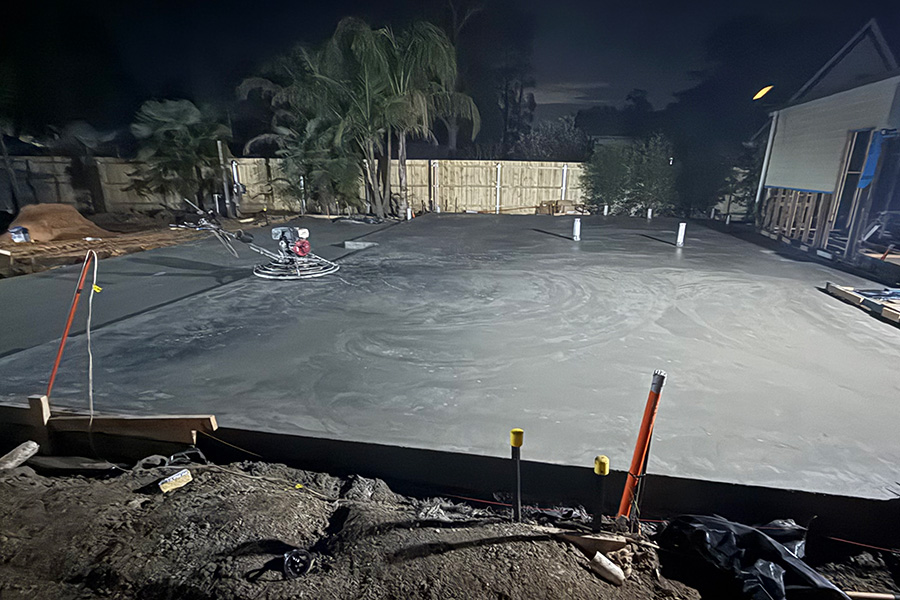
What Should You Look for in a House Slab Contractor?
If you are comparing concrete contractors for a new build, look beyond the price at the bottom of the quote.
Consider whether the contractor:
- Has experience with residential concrete slabs
- Can interpret engineering and construction plans
- Communicates clearly with builders and other trades
- Understands site preparation requirements
- Can manage larger concrete pours
- Plans access and scheduling properly
- Has experience across different types of Melbourne projects
- Provides clear information about the work being completed
For builders and developers, reliability is particularly important.
A concreter who turns up when expected, understands the plans and communicates properly can make the entire project easier to manage.
Residential House Slabs Across Melbourne
DND Concrete Constructions provides residential concreting and light commercial concrete work throughout Melbourne and surrounding areas.
Our team works on concrete house slabs, driveways, shed slabs, pathways, patios and other concrete projects, with a focus on solid preparation, professional workmanship and dependable communication.
For new home construction, we work with homeowners, builders, developers and other trades to help keep concrete works organised from preparation through to the completed pour.
If you are currently planning a new build, you can also learn more about our concrete house slabs Melbourne service and discuss the requirements of your project with our team.
Planning a Concrete House Slab in Melbourne?
The quality of a house slab is influenced by dozens of decisions made before and during the pour.
Site preparation, engineering, reinforcement, services, weather, concrete placement and communication all play a part.
Getting those details right from the beginning helps create a better foundation for everything that follows.
If you are planning residential or light commercial concrete works in Melbourne, speak with DND Concrete Constructions about your project.
Request a quote or book a site discussion with our team.
“`